

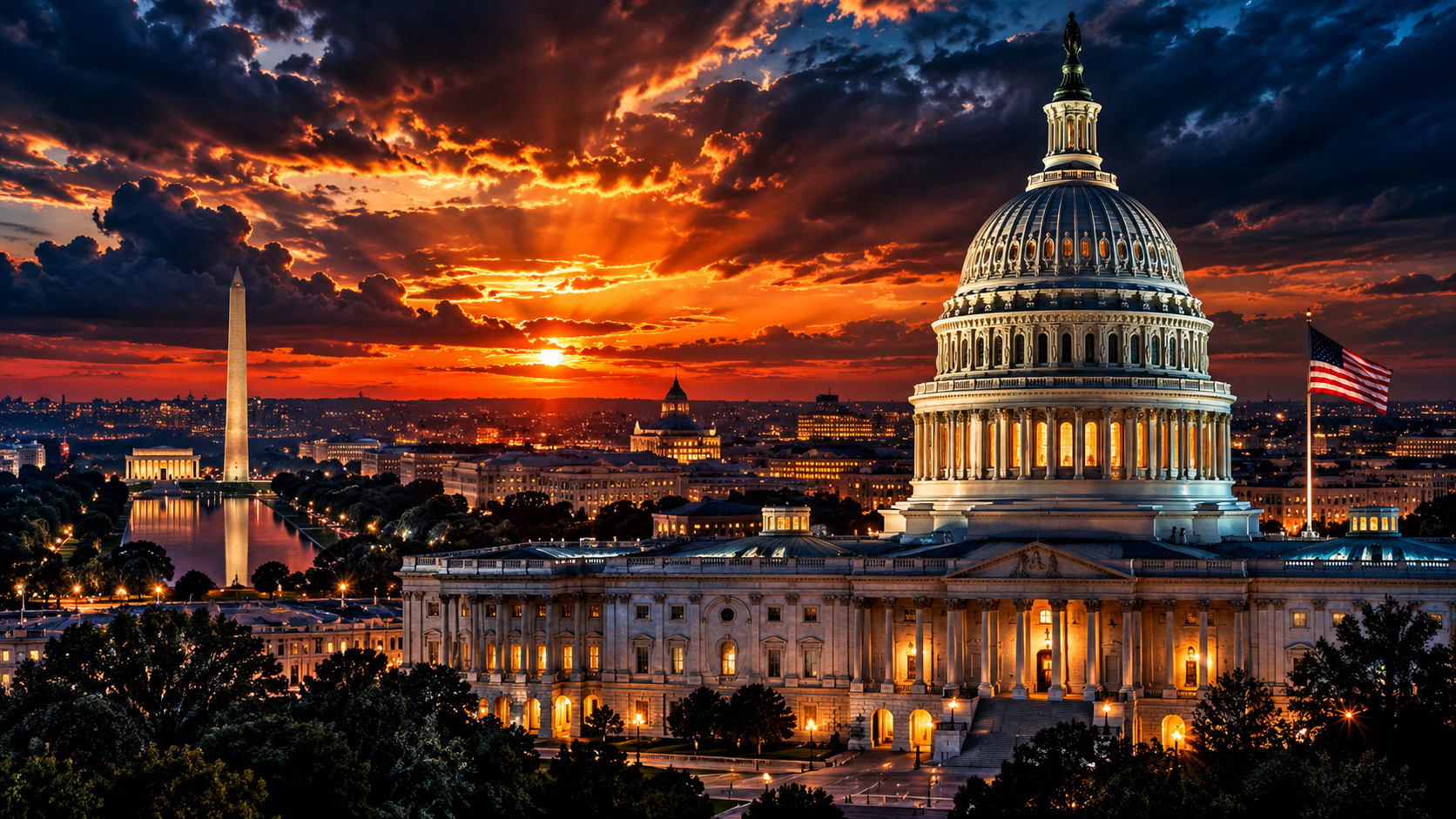
Americans are taught that political power begins with the people. Citizens vote, representatives take office, laws are passed, and government operates according to the Constitution. In theory, the arrangement is straightforward: elected officials answer to the public, and the institutions of government operate within clearly defined limits.
But anyone who has followed American politics long enough understands that winning an election and exercising power are not necessarily the same thing.
Presidents make promises they cannot always deliver. Members of Congress campaign on changing Washington, only to encounter institutions, political negotiations, financial pressures, and competing interests that complicate their agendas. Meanwhile, corporations, advocacy organizations, lobbyists, wealthy donors, and career government officials continue operating regardless of which political party controls the White House.
That raises a question worth examining: Who actually holds power in America?
The answer is more complicated than identifying the president, the wealthiest billionaire, or the political party controlling Congress. American power is distributed across institutions, concentrated in certain economic relationships, and constantly contested by organizations and individuals seeking to shape public decisions.
Understanding that system requires looking beyond campaign speeches and examining how authority and influence actually function.
The Constitution Establishes Power, but It Also Divides It
The American political system was deliberately constructed to prevent one institution from exercising unlimited authority.
The Constitution established three branches of federal government. Congress writes laws and controls federal appropriations. The executive branch implements and enforces federal law. The judiciary interprets the law and resolves legal disputes, including constitutional challenges.
Each branch possesses powers that can constrain the others. Presidents can veto legislation, Congress can override vetoes under specified conditions, and federal courts can invalidate government actions that violate the Constitution.
This arrangement is known as checks and balances.
Yet constitutional authority does not guarantee political effectiveness. A president may possess significant executive powers but still require congressional legislation to accomplish major policy objectives. Congress may control federal spending but face presidential resistance, judicial scrutiny, and disagreement within its own chambers.
Consequently, political power depends not only on what an official is legally permitted to do but also on whether that official can persuade, negotiate with, or overcome other institutions.
The presidency is powerful. It is not all-powerful.
Congress Controls More Than Many Americans Realize
Presidential elections dominate American political coverage. The presidency attracts enormous attention because the office combines executive authority, military leadership, diplomatic influence, and a uniquely visible national platform.
Nevertheless, Congress remains central to the exercise of federal power.
Congress determines the statutory framework governing federal programs, establishes funding priorities through legislation, conducts oversight, and plays a major role in shaping the executive and judicial branches through confirmation processes.
A president may announce an ambitious domestic policy, but implementing it can require congressional authorization and appropriations.
That gives lawmakers considerable leverage, particularly when control of Congress is divided or legislative majorities are narrow.
Power also exists within Congress itself. Committee leadership, party leadership, legislative procedures, and control over which proposals receive consideration can substantially affect what becomes law.
For ordinary Americans, this means that understanding Washington requires paying attention to more than the president. Decisions made in congressional committees and negotiations can have consequences for healthcare, education, housing, taxation, and employment.
The Permanent Institutions of Government
One of the most overlooked sources of American political influence is the federal administrative system.
Federal agencies employ career professionals who administer programs, conduct investigations, provide technical expertise, and implement laws passed by Congress.
These institutions operate across presidential administrations because the responsibilities of government do not disappear after an election.
The Department of the Treasury, Department of Justice, Environmental Protection Agency, and numerous other agencies exercise responsibilities established by law. Their authority varies, and their decisions are subject to legal, executive, legislative, and judicial constraints.
Career officials can influence how policies are developed and implemented through their expertise, institutional knowledge, and administrative responsibilities. Political appointees and elected officials, meanwhile, can redirect agency priorities within the limits of the law.
This relationship sometimes creates tension.
Supporters of a professional civil service argue that continuity, technical competence, and protections against partisan interference are necessary for effective government. Critics argue that administrative institutions can become insufficiently responsive to elected leadership and public demands.
Both concerns deserve serious examination.
The existence of a permanent bureaucracy does not establish that a secret organization controls the country. It demonstrates that modern government is too large and complex to operate exclusively through elected officials.
The distinction between institutional continuity and unaccountable power matters. Confusing the two makes it harder to identify genuine problems of oversight and accountability.
Money Can Purchase Access and Amplify Influence
No serious examination of American political power can ignore campaign financing.
Political campaigns require resources. Candidates spend money on advertising, staff, research, travel, communications, and voter outreach. Organizations seeking to influence elections can also spend substantial sums supporting or opposing candidates.
The Federal Election Commission distinguishes between direct contributions to candidates and independent political expenditures.
Super PACs, for example, may accept unlimited contributions from certain legally permitted sources to finance independent political activity. Their spending cannot legally be coordinated with candidates in ways prohibited by federal campaign finance rules.
That distinction is important because it means wealthy donors and organizations can exercise substantial influence over political messaging without simply handing unlimited amounts of money directly to a candidate.
But money does not automatically translate into control.
A campaign contribution does not prove that a politician changed a vote, adopted a policy, or provided a benefit in exchange. Demonstrating corruption requires evidence of improper conduct, not merely evidence that political donations occurred.
Still, financial resources can create advantages in political communication, organizational capacity, and access to decision-makers.
A wealthy individual may finance extensive political advertising. A major organization may employ researchers, legal specialists, and lobbyists. A smaller community group may struggle to achieve comparable visibility.
This imbalance raises an important democratic question: When political participation is legally open to everyone but effective political influence requires substantial resources, how equal is that participation in practice?
Lobbying Is Legal. Accountability Is the Real Question.
Lobbying is frequently portrayed as an inherently corrupt activity. In reality, lobbying is a broad form of political advocacy.
Businesses, labor organizations, universities, professional associations, civil rights groups, veterans’ organizations, and nonprofit institutions all seek to influence government decisions.
Lobbyists may provide information to lawmakers, advocate for legislation, oppose regulatory proposals, or explain how government decisions affect their members.
These activities can serve legitimate purposes. Legislators cannot independently possess expertise on every issue they consider.
The concern arises when access, resources, and influence become disproportionately concentrated among those able to finance sustained advocacy.
A large corporation may have an extensive government relations operation. A neighborhood organization advocating for affordable housing may have only volunteers.
Both can petition their government, but their capacity to maintain relationships, monitor legislation, and shape policy discussions may differ considerably.
The appropriate response is not to assume every lobbying relationship is corrupt. It is to demand transparency, scrutinize conflicts of interest, and evaluate whether public decisions serve legitimate public purposes.
Courts Can Shape the Country for Generations
Political power also extends beyond election cycles.
Federal judges, particularly Supreme Court justices, can influence American law for decades through their interpretation of statutes and constitutional provisions.
Court decisions affect voting rights, federal regulatory authority, criminal procedure, individual liberties, and the relationship between federal and state governments.
Judges are not legislators, and their authority is constrained by the cases before them and the legal framework they must apply. Nevertheless, judicial interpretation can profoundly influence the practical meaning of government power.
Because federal judges generally receive lifetime appointments during good behavior, their influence can extend well beyond the administrations responsible for their nominations.
This is one reason judicial appointments remain among the most consequential decisions made by presidents and the Senate.
Corporations, Media, and the Power to Shape Public Debate
Political power is not confined to government institutions.
Major corporations influence economic activity through employment, investment, pricing, technology, and market decisions. Their actions can affect entire communities, even without directly changing public policy.
Media organizations and digital platforms exercise a different kind of influence: they affect which issues receive attention and how public debates develop.
A subject that dominates national coverage may become a political priority. Another issue, despite its importance to affected communities, may struggle to gain widespread recognition.
Social media has complicated this relationship.
Independent journalists, community advocates, and ordinary citizens can now reach audiences without relying exclusively on traditional media organizations. At the same time, platform algorithms, advertising systems, and audience incentives can influence what information becomes visible.
These systems do not operate as a single unified political authority. They involve competing companies, institutions, individuals, and interests.
Nevertheless, they demonstrate that shaping public attention can be a form of influence even when it does not involve formal government power.
Where Do Ordinary Americans Fit Into the Equation?
The discussion of powerful institutions can create the impression that ordinary citizens have little influence over government.
That conclusion would be incomplete.
Citizens influence political outcomes through elections, civic organizations, public advocacy, litigation, journalism, community leadership, and sustained participation in public affairs.
Historically, major changes in American society have frequently involved organized citizens challenging established institutions.
The civil rights movement provides a particularly important example. Activists, religious organizations, students, attorneys, journalists, and community leaders challenged discriminatory laws and practices through litigation, public demonstrations, political organizing, and legislative advocacy.
Their efforts did not eliminate every inequality, but they helped transform American law and public institutions.
The lesson is that power is not exclusively something possessed by established elites. It can also be developed through organization, persistence, public knowledge, and collective action.
However, meaningful participation requires more than simply casting a ballot every few years.
Citizens benefit from understanding how laws are written, how agencies operate, how public budgets are developed, and which officials are responsible for particular decisions.
Without that knowledge, public frustration can easily be directed toward the wrong institution or individual.
The Difference Between Holding Office and Holding Influence
Perhaps the most important distinction in American politics is the difference between formal authority and practical influence.
A president possesses constitutional and statutory powers. A billionaire may possess extraordinary financial resources. A corporation may control substantial economic assets. A media organization may reach millions of people. A community movement may mobilize public pressure.
These are different forms of power.
They can reinforce one another, compete against one another, or operate independently.
Treating them as identical creates confusion. So does assuming that every influential organization belongs to a single hidden network controlling American government.
The more useful approach is to examine specific decisions and ask identifiable questions.
Who had the legal authority to make the decision? Who advocated for it? Who financed the relevant political activity? What evidence demonstrates influence? Who benefited, who was harmed, and what mechanisms of accountability were available?
Those questions produce more meaningful answers than broad accusations unsupported by evidence.
The Urban Politicians Perspective
America’s political system is neither controlled exclusively by elected officials nor reducible to a single group of wealthy individuals operating behind the scenes.
It is a complex arrangement of constitutional institutions, economic resources, political organizations, administrative authority, judicial decisions, and public participation.
Some participants possess dramatically greater resources than others. That inequality deserves scrutiny. But understanding the system also requires recognizing the legal limits, competing interests, and democratic mechanisms that shape how power is exercised.
The challenge for citizens is not simply determining who occupies the White House. It is understanding the institutions and relationships that influence the decisions affecting their lives.
An informed public is better equipped to distinguish legitimate authority from improper influence, identify conflicts of interest, and demand accountability.
Power becomes harder to challenge when people do not understand how it works.
And that is why political education matters.
At Urban Politicians, the objective is not to tell readers which political party deserves their loyalty. It is to provide the historical context, institutional knowledge, and evidence necessary to evaluate political power independently.
Free your mind. Think independently.
Do you believe America’s greatest political power rests with elected officials, wealthy donors, major corporations, or the institutions that continue operating regardless of who wins an election?





Leave a Reply