

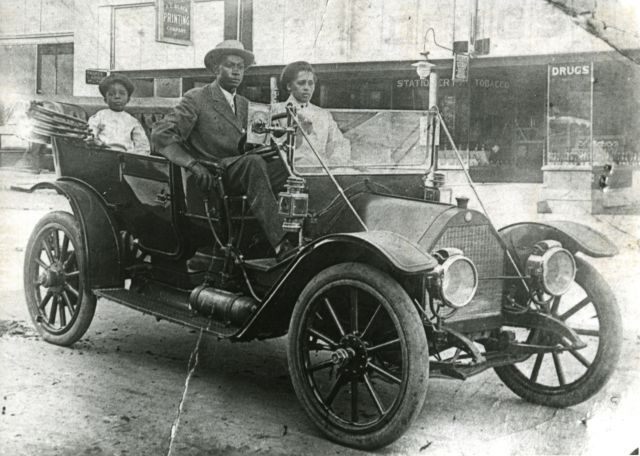
Before fire consumed Greenwood, the district was a center of Black residential and commercial life inside one of America’s fastest-growing oil cities. Its streets contained homes, rental properties, grocery stores, hotels, restaurants, theaters, professional offices, churches, schools and newspapers. Doctors, lawyers, educators, laborers, domestic workers, merchants and property owners participated in an economy shaped by both Black enterprise and the restrictions of racial segregation.
On May 31 and June 1, 1921, thousands of white Tulsans attacked that community. Approximately 35 city blocks were destroyed, and the American Red Cross recorded 1,256 houses burned. Residents filed more than $1.8 million in riot-related claims against Tulsa, most of which the city disallowed; insurers also denied claims under riot exclusions. No public compensation remotely proportionate to the losses followed.
The Justice Department’s 2025 review converted the frequently cited $1.8 million figure into $32,266,329.55 in December 2024 dollars using the Consumer Price Index. That calculation is useful, but it measures changes in consumer prices—not the full value of what Greenwood lost. It does not capture every stolen dollar, interrupted business, lost rent payment, destroyed professional practice, unrealized property appreciation or inheritance that might otherwise have passed to another generation.
Greenwood was rebuilt, and that fact deserves emphasis. A Smithsonian collection timeline reports that 80 businesses were operating again in 1922, while the district eventually entered another period of commercial strength. But reconstruction financed largely by survivors cannot be treated as reimbursement for the property, income and economic opportunities taken from them.
The central question is not simply how much property was destroyed in Greenwood. It is how racial violence, government action, insurance exclusions and uncompensated loss altered the economic future of a community—and what rebuilding could never restore.
Greenwood Was Built Within Segregation, Not Outside the American Economy
Tulsa expanded rapidly after the 1905 discovery of the Glenn Pool oil field. The city’s population grew from 18,182 in 1910 to 72,075 in 1920, drawing workers, entrepreneurs and investors into an oil-boom economy. O.W. Gurley, a Black entrepreneur and former educator and postal worker, purchased approximately 40 acres in north Tulsa in 1906 and sold property to other Black residents.
Greenwood’s growth reflected initiative, but it also reflected coercion. Housing restrictions and Jim Crow customs limited where Black Tulsans could live, shop and receive services. Those barriers concentrated part of the community’s spending inside Greenwood, creating demand for Black-owned lodging, food, entertainment, medical care, legal representation, personal services and rental housing.
Money did not simply circulate inside a sealed racial economy. Black residents worked throughout Tulsa, purchased goods from businesses outside Greenwood and used financial institutions controlled by white owners. Successful Greenwood property owners and entrepreneurs, including Gurley and J.B. Stradford, supplied private credit, but contemporary directories and other records examined by Federal Reserve Bank of Kansas City researchers contain no evidence of a Black-owned bank in Greenwood.
Even the number of businesses depends on which record and boundary are used. The property-loss research assembled for the 2001 Oklahoma Commission reported 159 listed businesses in 1920 and 191 in the African American section before the massacre. These figures are not necessarily contradictory; they reflect different dates, directories and definitions of Greenwood’s commercial geography.
The label “Black Wall Street” can also conceal differences within the community. Greenwood included affluent professionals, substantial property owners and entrepreneurs with regional reputations, but it also included wage workers, poor families and crowded households. Property claims documented expensive furniture, jewelry and pianos in some residences, while directories showed other homes occupied by more than one family.
That complexity strengthens the economic history rather than diminishing it. Greenwood was not remarkable because every resident was wealthy. It was significant because Black Tulsans had created a broad local economy—with businesses, housing, employment and civic institutions—under conditions that denied them equal access to the wider city.
The Courthouse Crisis Became a Coordinated Assault on Greenwood
The immediate crisis began on May 30, 1921, when 19-year-old Dick Rowland, a Black shoe shiner, was accused of assaulting Sarah Page, a white elevator operator in the Drexel Building. Precisely what happened inside the elevator remains uncertain. Frequently repeated explanations that Rowland tripped or stepped on Page’s foot are plausible reconstructions, not conclusively established facts.
Police arrested Rowland, and the Tulsa Tribune published an inflammatory account the following day. A white crowd gathered outside the Tulsa County Courthouse, where Rowland was being held. Armed Black men, many of them World War I veterans who feared a lynching, traveled to the courthouse and offered assistance in protecting him.
During a confrontation, a gun discharged, although the surviving record does not conclusively establish who fired first. Violence spread rapidly after that moment. Yet the scale and organization of what followed cannot be explained as a spontaneous exchange between two equally situated groups.
The Justice Department’s 2025 review concluded that Tulsa police indiscriminately deputized as many as 500 white men in less than 30 minutes. Many had been drinking, and most came from the courthouse crowd that had demanded Rowland’s lynching. According to the department, law-enforcement officers helped organize special deputies and other white Tulsans into forces that then attacked Greenwood.
By daybreak on June 1, armed white groups advanced systematically into the district. Buildings were looted before being set on fire, and law-enforcement officers participated in the destruction by disarming and detaining Black residents; allegations of official participation in arson and murder also survive. The Justice Department estimated that as many as 10,000 white Tulsans may have participated in the attack.
Black residents attempted to defend their families and property, but Tulsa police and members of the local National Guard unit disarmed and detained many of them. Survivors were taken to Convention Hall, McNulty Park, the fairgrounds and other detention sites under armed guard. A Black detainee needed sponsorship from a white person to obtain the identification card required to leave.
That detention had an economic function as well as a coercive one. It kept residents away from endangered homes and businesses, restricted their labor and placed their mobility under white supervision at the moment when their community required emergency action. People who had been attacked were treated as the population requiring control.
Aircraft unquestionably flew over Tulsa, and airplanes were used to observe Black residents and report their movements to law enforcement. Numerous witnesses reported gunfire or incendiary material coming from the air. The 2001 Oklahoma Commission found it reasonable to believe that some incendiaries were dropped, while acknowledging limited physical evidence; the Justice Department later described the extent of aerial shooting or bombing as disputed.
The Losses Extended Far Beyond the Buildings That Burned
The physical destruction was enormous. The Red Cross recorded 1,256 houses burned, 215 houses looted but not burned and 314 other buildings looted or robbed without being destroyed by fire. Approximately 35 blocks were devastated, including commercial buildings, churches, schools, a hospital, newspaper offices and private residences.
These categories reveal why fire damage alone understates the attack. White assailants took merchandise, jewelry, furniture, cash and other movable property before many structures burned. Professional equipment, business records, household goods and inventories disappeared along with the buildings that contained them.
The destruction also interrupted income. Merchants could not sell goods, physicians lost offices and instruments, landlords lost rental payments, and workers lost jobs, tools and access to their places of employment. Customer relationships and supplier arrangements—forms of economic value rarely listed on a property claim—were broken.
The human cost is more difficult to quantify. The official death count was 36, while many historians and researchers place the toll between 75 and 300. Incomplete records, missing residents, hurried or unrecorded burials and continuing questions about possible unmarked graves prevent a definitive count.
Nor do historical financial figures fit neatly into a single total. The Oklahoma Commission’s property-loss research located 193 court cases against the city and insurance companies claiming $1,470,711.56 in damage. Residents also filed more than $1.8 million in riot-related claims with the city, while the Tulsa Real Estate Exchange estimated approximately $1.5 million in real-property damage and $750,000 in personal-property losses.
Those numbers use overlapping categories and should not be added together. They also reflect what survivors could document under difficult conditions, not necessarily everything taken or destroyed. Cash kept at home, informal credit arrangements and possessions without receipts were especially vulnerable to disappearing from the legal record.
Inflation adjustments create another potential misunderstanding. Converting $1.8 million into $32.27 million in December 2024 dollars answers a limited question: how much purchasing power that amount represents after changes in consumer prices. It does not estimate what Greenwood property would be worth after a century of appreciation or what destroyed enterprises might have earned if they had continued operating.
A fuller economic assessment would include business interruption, lost wages, foregone rent, reconstruction expenses and the value of assets that could no longer serve as loan collateral. It would also consider human capital, migration and disrupted professional networks. No single dollar figure can precisely reconstruct that counterfactual history, but its exclusion from an inflation calculation should not be mistaken for proof that the cost was negligible.
Insurance and Government Decisions Converted Destruction Into Uncompensated Loss
Insurance might have spread some of Greenwood’s losses across institutions with the resources to absorb them. Instead, insurers relied on clauses excluding damage caused directly or indirectly by a riot. The classification of the attack therefore had direct financial consequences: calling it a “riot” did not merely shape public memory; it helped determine whether policyholders would be paid.
In Redfearn v. American Central Insurance Co., decided in 1926, the Oklahoma Supreme Court enforced such an exclusion in litigation involving the Dreamland Theatre and Red Wing Hotel. The decision left the owner without recovery under the policies at issue. Contracts that covered fire losses became ineffective because the court found that the destruction occurred during a riot covered by the exclusions.
Tulsa’s government then made reconstruction more difficult. On June 7, 1921, the city enacted Fire Ordinance No. 2156, requiring buildings across much of Greenwood to be constructed from concrete, brick or steel and to rise at least two stories. Such standards may sound like neutral fire-safety rules, but imposing them on recently dispossessed residents sharply increased the cost of returning to their land.
Greenwood attorneys challenged the ordinance and obtained a permanent injunction in September 1921 on the ground that it deprived owners of their property rights. The legal victory prevented the measure from permanently pricing many owners out of reconstruction. It did not repay their losses, replace destroyed materials or compensate them for months without income.
The American Red Cross provided food, clothing, medicine, medical care, tents and other emergency relief. That assistance saved lives and helped survivors endure immediate displacement, but emergency relief was not a substitute for a reconstruction program. Tulsa and Oklahoma did not establish public compensation proportionate to the damage.
Local officials also attempted to control outside assistance. The city’s all-white Public Welfare Board rejected outside contributions, including a $1,000 donation from the Chicago Tribune. The result was a recovery process in which survivors were expected to rebuild through their own labor, savings, credit and community relationships after public institutions had failed to protect them.
This distinction is central to the economics of the massacre. Destruction becomes a longer-term wealth shock when insurance does not pay, government does not compensate and legal remedies do not arrive. Every dollar spent rebuilding an already-owned house was a dollar unavailable for expansion, education, investment or inheritance.
Reconstruction Demonstrated Capacity Without Restoring the Original Trajectory
Greenwood’s residents resisted efforts to displace them and began rebuilding with extraordinary speed. A Smithsonian collection timeline reports that 80 businesses were open in 1922. By 1942, the district contained 242 Black-owned and Black-operated establishments.
The strongest argument for emphasizing this recovery is substantial. Greenwood was not permanently erased in 1921, and describing it only as a destroyed community overlooks the people who returned, reconstructed buildings and revived local institutions. The district again became a significant center of Black commercial and cultural life.
But resilience and restoration are different economic claims. A family that rebuilds a home after uncompensated destruction has demonstrated determination; it has not been made whole. A business that reopens after losing its building, inventory and operating income may recover its presence without recovering the capital or growth opportunities it lost.
An economic study by Alex Albright, Jeremy A. Cook, James J. Feigenbaum, Laura Kincaide, Jason Long and Nathan Nunn estimated that the massacre reduced Black male household heads’ probability of homeownership by approximately 4.2 percentage points during the following two decades. The researchers also estimated reductions in occupational status, school enrollment and white-collar employment.
These are statistical estimates, not measurements of every Greenwood family’s experience. They depend on historical records, comparison groups and assumptions used to isolate the massacre’s effects. The findings nevertheless challenge the idea that rebuilding returned the community to the trajectory it would have followed without the attack.
The study’s estimates indicate that the adverse effect on Black homeownership in Tulsa persisted and grew in its 1980–2000 data. That long horizon does not mean every later disparity can be attributed exclusively to events in 1921. It shows how the initial destruction could interact with subsequent discrimination and public policy across generations.
A home is shelter, but it can also be collateral, rental property and an inheritable asset. A business can support employees, finance another enterprise and provide children with both income and professional connections. Destroying those assets affects not only what a family possesses on one day but also what it can finance, transfer and build later.
Later Policies Changed Greenwood Again
Greenwood’s postwar decline cannot be explained by the massacre alone. Desegregation opened opportunities for Black consumers to shop, work and live beyond the boundaries of the district, reducing the concentrated market that segregation had helped create. Greater freedom was a necessary civil-rights achievement even when it produced difficult adjustments for businesses built within a segregated commercial system.
Suburbanization and changing retail patterns also affected Greenwood, as they affected urban business districts across the country. At the same time, redlining, discriminatory lending and public disinvestment constrained access to capital. These forces altered the district’s competitive position without erasing the significance of its earlier reconstruction.
Urban-renewal projects and the construction of Interstate 244 and U.S. 75 imposed another round of displacement. Homes and businesses were torn down, and the highways divided the neighborhood from surrounding areas. Public infrastructure again determined which land would be acquired, cleared or rendered less economically valuable.
Separating these forces matters because historical analysis should not convert one atrocity into a universal explanation. Not every later business closure, population change or wealth disparity resulted directly from the massacre. Yet later policies operated on a community whose accumulated assets had already been violently destroyed and largely left uncompensated.
Recognition Has Advanced Further Than Material Repair
Oklahoma’s 2001 commission produced a major official investigation of the massacre and recommended forms of restitution, including direct payments to survivors and descendants, scholarships, an economic-development enterprise zone and a memorial. Its report helped correct decades of public silence and brought archival evidence into broader circulation. Recognition, however, did not produce comprehensive compensation.
Survivors and descendants continued seeking relief through the courts. Federal litigation filed in 2003 was dismissed after courts concluded that the applicable statutes of limitation had expired. A state lawsuit filed in 2020 advanced public-nuisance and unjust-enrichment claims, but the Oklahoma Supreme Court affirmed its dismissal in Randle v. City of Tulsa on June 12, 2024, and denied rehearing on September 9, 2024.
The court called the plaintiffs’ grievance “legitimate and worthy of merit,” but held that it did not supply a remedy under Oklahoma’s public-nuisance statute. It also ruled that the pleadings did not establish the elements required for unjust enrichment. The result illustrates the distance between documenting a wrong and identifying a judicial mechanism capable of remedying it a century later.
The Justice Department’s 2025 review added the federal government’s first comprehensive official accounting. It concluded that the attack became systematic through coordination among white residents and law-enforcement entities, while explaining that prosecution was no longer possible because potential defendants were dead, limitations periods had expired and constitutional confrontation requirements posed an insurmountable barrier. The review corrected the record without creating a path to criminal punishment or financial recovery.
Tulsa took another step on June 1, 2025, when Mayor Monroe Nichols announced a “Road to Repair” and the creation of a private charitable Greenwood Trust. The announced goal was to secure $105 million in assets for housing, cultural preservation, land acquisition, scholarships, business support and related work. The framework emphasized community investment rather than direct cash payments through the trust.
As of October 18, 2026, Tulsa’s official Road to Repair page described the work as ongoing, and the Greenwood Trust’s website solicited contributions and described its investment priorities. The reviewed official pages did not disclose how much of the $105 million target had actually been secured or committed. The existence of an operating trust should therefore not be confused with proof that its fundraising target or proposed programs have been completed.
Direct survivor payments, descendant claims, neighborhood investment, land remedies, historical preservation and institutional accountability remain distinct approaches, even when public debate places all of them under the broad term “reparations.”
The Urban Politicians Perspective
Greenwood’s history challenges two incomplete narratives. The first treats the massacre as an uncontrolled riot detached from government institutions. The Justice Department’s findings concerning deputization, coordination, detention and law-enforcement participation make that description increasingly difficult to defend.
The second narrative treats Greenwood’s reconstruction as proof that the economic damage was overcome. That interpretation mistakes the capacity of survivors for the fulfillment of public responsibility. People can rebuild impressively while still carrying losses that were never repaid.
The evidence supports a more demanding conclusion. Greenwood residents created a complex economy inside a segregated city, endured a coordinated racial assault and reconstructed much of their community despite denial of insurance recovery and limited government assistance. Their success after the massacre does not reduce the scale of the wrong; it reveals how much labor and capital survivors had to contribute merely to regain part of what had been taken.
Property rights are meaningful only when institutions protect them consistently. Ownership cannot create durable wealth if officials help arm attackers, authorities detain owners instead of defending their property, insurers invoke exclusions and courts provide no timely remedy. A deed may establish legal title, but political power determines whether that title receives equal protection during a crisis.
Recognition matters because a society cannot repair what it refuses to name. Memorials, investigations, excavations and public records can correct false narratives and preserve evidence. Yet historical acknowledgment and material repair are not interchangeable, particularly when documented losses were never paid.
At Urban Politicians, we believe the economic meaning of Tulsa lies in the relationship between private achievement and public power. Greenwood demonstrated what Black citizens could build under exclusion. The massacre demonstrated how quickly ownership could be stripped of practical value when the institutions responsible for protecting life and property acted unequally.
The unpaid debt is therefore larger than any inflation adjustment. It includes property that disappeared, income that stopped, opportunities that narrowed and legal protections that arrived too late. Greenwood’s recovery deserves honor, but honoring it requires refusing to use resilience as an excuse for leaving destruction uncompensated.
Free your mind. Think independently.
Quick Question: When a community rebuilds after government-enabled destruction without receiving meaningful compensation, should that recovery be understood as restoration—or as evidence of what survivors achieved despite an unpaid public debt?
Sources
- U.S. Department of Justice, Civil Rights Division — Review and Evaluation: Tulsa Race Massacre
- Oklahoma Commission to Study the Tulsa Race Riot of 1921 — Final Report
- Oklahoma Supreme Court — Randle v. City of Tulsa, 2024 OK 40
- Oklahoma Supreme Court — Redfearn v. American Central Insurance Co., 1926 OK 22
- City of Tulsa — Road to Repair
- City of Tulsa — The Greenwood Trust
- The Greenwood Trust — Official Website
- Oklahoma Historical Society — Tulsa
- Oklahoma Historical Society — Greenwood District
- Oklahoma Historical Society — Tulsa Race Massacre
- Tulsa City-County Library — 1921 Tulsa Race Massacre
- Federal Reserve Bank of Kansas City — A Great Moral and Social Force: A History of Black Banks
- Albright et al. — After the Burning: The Economic Effects of the 1921 Tulsa Race Massacre
- NBER — Estimating Long-Term Effects of the 1921 Tulsa Race Massacre
- City of Tulsa — Kirkpatrick Heights/Greenwood Site Master Plan Background
- Smithsonian Institution — Guide to the 1921 Tulsa Race Massacre Oral History Collection
- Associated Press — Tulsa Race Massacre Reparations Fight Continues



Leave a Reply