

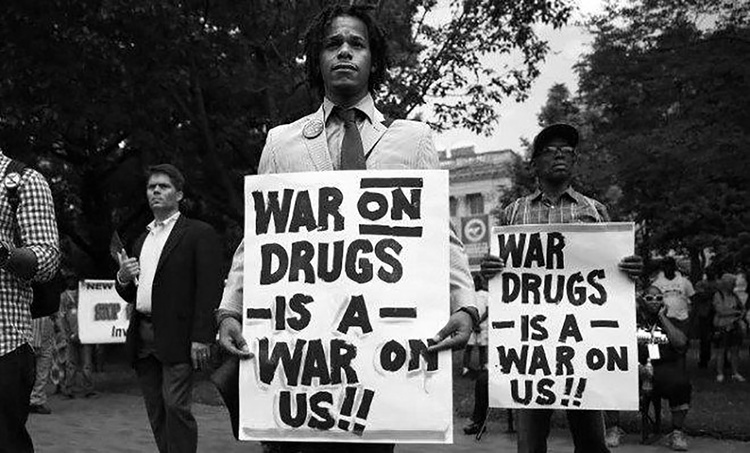
For more than half a century, the United States has waged an expansive campaign against illegal drugs. Presidents have promised to dismantle trafficking organizations, lawmakers have enacted increasingly severe penalties, and law enforcement agencies have devoted enormous resources to drug investigations and arrests.
The stated objectives were straightforward: reduce illegal drug distribution, protect communities, discourage substance abuse, and prevent the violence associated with criminal markets.
But the history of America’s War on Drugs raises questions that extend far beyond narcotics enforcement.
How did policies designed to protect communities contribute to the expansion of the prison system? Why did certain neighborhoods experience disproportionately aggressive enforcement? And what happens when the consequences of a criminal conviction extend into employment, housing, education, and family life?
These questions matter because drug policy has influenced American society for generations. Its effects can be found in criminal justice institutions, neighborhood economies, public health systems, and the political debates that continue today.
The central issue is not whether illegal drug markets can harm communities. They can. The question is whether America’s chosen response consistently reduced those harms—or created additional problems that policymakers failed to anticipate.
The War on Drugs Did Not Begin With Richard Nixon
President Richard Nixon is closely associated with the modern War on Drugs, but federal drug regulation existed long before his administration.
During the early twentieth century, the federal government expanded its involvement in regulating narcotics through legislation and enforcement institutions. Drug policy developed through a combination of public health concerns, international agreements, criminal enforcement priorities, and social attitudes toward particular substances.
The modern federal framework took shape with the Comprehensive Drug Abuse Prevention and Control Act of 1970.
Title II of that legislation, known as the Controlled Substances Act, established a unified system for regulating certain drugs according to their accepted medical uses and potential for abuse and dependence.
Nixon’s administration also expanded federal attention to drug enforcement and treatment. In 1973, the Drug Enforcement Administration was established through a federal reorganization.
The administration’s approach combined enforcement, international drug-control efforts, and treatment initiatives, although the balance among those priorities shifted over time.
That historical distinction matters.
The War on Drugs was not created through one presidential speech, nor was it implemented through a single law. It developed through decades of legislation, administrative decisions, policing strategies, and changing political priorities.
The 1980s Transformed Drug Enforcement Into a Sentencing Revolution
The 1980s marked a major turning point.
The expansion of cocaine markets, particularly crack cocaine, generated public concern about addiction, violence, and neighborhood stability.
News coverage and political campaigns increasingly emphasized the dangers associated with illegal drug distribution.
Lawmakers responded with tougher criminal penalties.
The Anti-Drug Abuse Act of 1986 established mandatory minimum sentences for specified federal drug trafficking offenses based on drug type and quantity.
Under that law, the quantity of crack cocaine required to trigger certain mandatory minimum sentences was dramatically smaller than the quantity of powder cocaine required to trigger the same penalties.
The resulting 100-to-1 quantity ratio became one of the most controversial features of federal drug sentencing.
Supporters of tougher penalties argued that drug trafficking threatened public safety and that severe punishment could deter criminal activity.
Critics argued that mandatory sentencing restricted judicial discretion, imposed excessive penalties in some cases, and contributed to unequal outcomes.
The distinction between federal and state law is important. Federal sentencing legislation did not automatically determine every state prosecution, but federal policy became part of a broader national movement toward harsher punishment.
By the 1990s, sentencing policies involving mandatory minimums, repeat-offender enhancements, and restrictions on early release had helped transform the American correctional system.
Mass Incarceration Was a Policy Choice
One of the most significant conclusions in modern criminal justice research is that America’s prison expansion cannot be explained solely by changes in crime.
In its landmark 2014 report, The Growth of Incarceration in the United States, the National Research Council concluded that sentencing laws, longer prison terms, and intensified punishment were central drivers of the dramatic increase in incarceration.
Drug enforcement contributed to this expansion, particularly through federal imprisonment and increased prosecution of drug offenses.
However, drug convictions were not the only cause. Longer sentences for violent crimes, repeat-offender laws, and changes in parole policies also played substantial roles.
This distinction is essential.
It would be inaccurate to claim that the War on Drugs alone created mass incarceration.
But it would be equally inaccurate to dismiss drug policy’s contribution.
The National Academies’ research found that the expansion of incarceration did not clearly produce public safety benefits proportional to its enormous social and financial costs.
The evidence also raised questions about whether extremely long sentences provided meaningful additional deterrence.
The broader lesson is that incarceration levels reflect decisions made by lawmakers, prosecutors, judges, and correctional institutions.
Those decisions can be reconsidered.
Why Enforcement Fell Unequally Across Communities
The War on Drugs had particularly significant consequences for many Black and Latino communities.
The National Academies’ 2023 report Reducing Racial Inequality in Crime and Justice found that intensified drug policing and prosecution were associated with increased racial disparities in arrests and imprisonment.
The effects involved multiple factors, including enforcement priorities, sentencing laws, neighborhood conditions, and differences in exposure to criminal justice institutions.
The crack-versus-powder cocaine sentencing disparity became especially important because the two forms of cocaine were associated with different patterns of prosecution and punishment.
Critics argued that the disparity imposed particularly severe consequences on Black defendants.
This does not establish that every officer, prosecutor, or legislator acted with discriminatory intent.
It does demonstrate why policy outcomes must be examined separately from stated intentions.
A law can be written without explicit racial classifications and still produce unequal consequences.
The question for policymakers is whether those consequences are justified by credible evidence and legitimate public safety objectives.
When large disparities persist, public institutions have a responsibility to investigate their causes.
The Consequences Extended Beyond Prison
A criminal conviction can affect a person’s life long after a sentence has been completed.
Employment opportunities may become more limited. Certain professional licenses can be difficult to obtain. Housing applications may become more complicated. Educational opportunities and financial stability may also be affected.
Families can experience substantial disruption when a parent or household member is incarcerated.
Children may face separation from caregivers, financial instability, and changes in household responsibilities.
Communities with high rates of incarceration can experience the cumulative effects of these disruptions.
These consequences do not eliminate the need to hold people accountable for criminal conduct.
They do, however, raise questions about proportionality.
If the objective of punishment includes preventing future crime, policymakers must consider whether the long-term consequences of particular penalties support or undermine successful reintegration.
A criminal justice system concerned with public safety should evaluate what happens after individuals leave correctional institutions, not simply what happens when they enter them.
Hip-Hop Documented the Reality of the Drug War
While politicians debated enforcement strategies, hip-hop artists documented the social environments in which those policies operated.
The emergence of crack cocaine markets, aggressive policing, neighborhood violence, and incarceration became recurring subjects in rap music.
Artists described experiences involving drug distribution, addiction, poverty, law enforcement, and the pressures associated with street economies.
These recordings were not academic studies or official investigations.
They were cultural expressions shaped by personal experiences, artistic interpretation, and the commercial demands of the music industry.
Nevertheless, hip-hop helped introduce national audiences to perspectives that conventional political discussions sometimes overlooked.
Groups such as Public Enemy examined institutional power and racial inequality. Other artists used storytelling to portray the economic pressures and consequences associated with illegal drug markets.
Some recordings criticized drug trafficking and addiction. Others depicted criminal activity in ways that attracted criticism for glorifying it.
The culture contained competing messages, just as American society contained competing explanations for the drug crisis.
Hip-hop’s historical significance lies partly in its role as a cultural record of communities experiencing major changes in policing, criminal justice, and economic life.
It did not provide every answer.
But it made certain questions impossible to ignore.
The Crack Sentencing Disparity Eventually Faced Reform
By the early twenty-first century, the federal crack-versus-powder cocaine sentencing disparity had become the subject of sustained criticism.
Congress responded with the Fair Sentencing Act of 2010.
The legislation reduced the statutory crack-to-powder quantity disparity from 100-to-1 to 18-to-1 and eliminated the mandatory minimum sentence for simple possession of crack cocaine.
The United States Sentencing Commission subsequently examined the effects of the legislation on federal sentencing.
These changes represented a significant shift in federal policy.
They also demonstrated that sentencing practices once defended as necessary could later be reconsidered through new evidence, changing political priorities, and public debate.
Reform did not eliminate every sentencing disparity or resolve the broader challenges of drug enforcement.
But it established that criminal justice policy is not permanent.
Laws can change when their consequences become better understood.
Drug Addiction Is Also a Public Health Challenge
Drug policy has historically involved tension between criminal enforcement and medical treatment.
Illegal drug markets can generate violence, exploitation, and dangerous products.
At the same time, substance-use disorders involve medical and behavioral health challenges that punishment alone may not resolve.
A person experiencing addiction may require treatment, counseling, medical care, and long-term recovery support.
Criminal penalties do not automatically provide those services.
The National Academies’ incarceration research recommended reconsidering enforcement strategies that rely heavily on imprisonment and examining approaches that place greater emphasis on public health.
This does not mean abandoning law enforcement.
Trafficking organizations, violent criminal activity, and dangerous illegal distribution networks can present legitimate public safety threats.
The policy challenge is determining which interventions are appropriate for different circumstances.
Someone seeking treatment for a substance-use disorder presents different needs from an organization engaged in violent trafficking.
Effective policy should recognize that distinction.
The Modern Drug Crisis Has Changed the Debate
The United States continues to confront serious challenges involving substance misuse, illegal drug distribution, and overdose deaths.
The emergence of powerful synthetic opioids, including illicitly manufactured fentanyl, has complicated the relationship between public health and criminal enforcement.
The contemporary drug environment differs substantially from the cocaine-focused political debates of the 1980s.
Drug potency, distribution networks, treatment needs, and overdose risks have changed.
This means that historical lessons should inform current policy without being treated as automatic solutions to every modern problem.
A strategy that proved ineffective in one context may not address the circumstances of another.
Likewise, evidence supporting treatment and prevention does not establish that criminal enforcement has no legitimate role.
The strongest policies should be evaluated according to measurable outcomes: reduced overdose deaths, reduced violence, improved treatment access, effective disruption of dangerous trafficking operations, and fewer unnecessary harms to communities.
What Should America Have Learned?
The history of the War on Drugs demonstrates the danger of evaluating public policy solely through political messaging.
Tough language does not guarantee effective enforcement.
More arrests do not necessarily establish that communities are safer.
Longer sentences do not automatically produce stronger deterrence.
And the existence of legitimate drug-related threats does not justify every policy adopted in response.
Government institutions must evaluate whether their actions accomplish their stated objectives.
That requires reliable data, independent research, transparency, and a willingness to reconsider policies when evidence reveals serious shortcomings.
The same standards should apply to proposed reforms.
Reducing incarceration is not automatically successful if communities experience greater violence or inadequate responses to dangerous criminal activity.
Expanding treatment is not sufficient unless programs are accessible, appropriately designed, and capable of producing meaningful outcomes.
The objective should be reducing harm rather than defending a political identity.
The Urban Politicians Perspective
The War on Drugs represents one of the most consequential examples of how government decisions can reshape American communities over generations.
Its history includes legitimate concerns about addiction, trafficking, and violence.
It also includes sentencing policies, enforcement practices, and institutional decisions that produced substantial social costs and unequal consequences.
Both realities deserve recognition.
A serious examination of drug policy should reject the idea that public safety and criminal justice reform are inherently incompatible.
Communities deserve protection from dangerous criminal activity.
They also deserve laws that are proportionate, fairly enforced, and supported by evidence.
The history of the War on Drugs offers a broader lesson about political power.
When government expands its authority in response to a crisis, citizens should ask not only what officials intend to accomplish but also how success will be measured, what safeguards will exist, and who will bear the consequences if the policy fails.
Those questions should be asked before a policy becomes entrenched—not only decades afterward.
At Urban Politicians, we believe historical analysis should help readers understand how decisions made in Washington influence the lives of people far beyond the nation’s capital.
The War on Drugs was not simply a collection of laws.
It became part of the social, economic, and political history of American communities.
Understanding that history is essential to evaluating what should come next.
Free your mind. Think independently.
Did America’s War on Drugs make communities safer, or did its reliance on incarceration create consequences that outweighed many of its intended benefits?

Leave a Reply